

Building a lean operating model that scales globally
Ask Aspire Anything | 03


Ask Aspire Anything is an advice column where global founders submit their thorniest questions and Aspire’s experts provide real, actionable answers — follow us on Substack to get the how-to when you need it.
Join our FoundersXchange community of 850+ global founders and VCs.
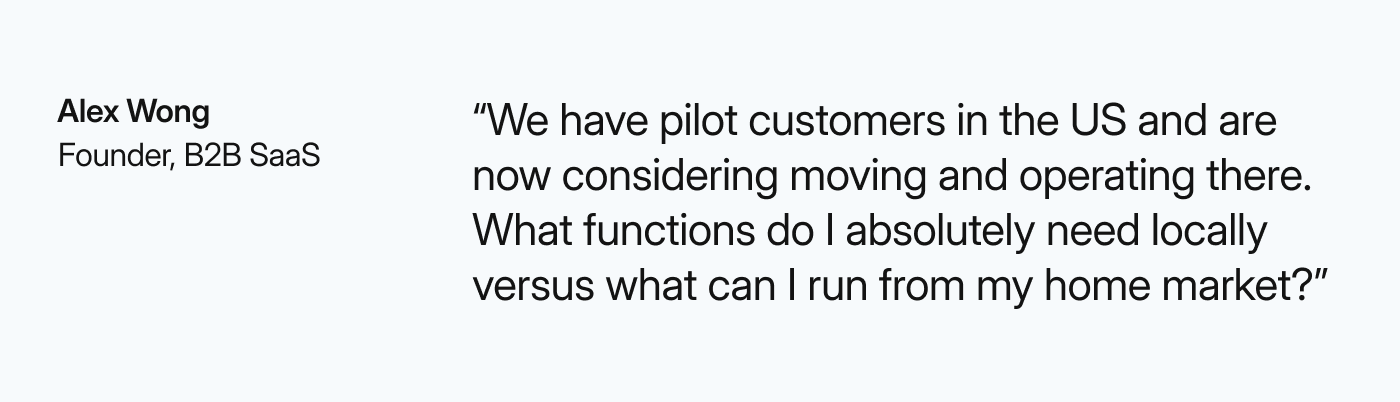
The question
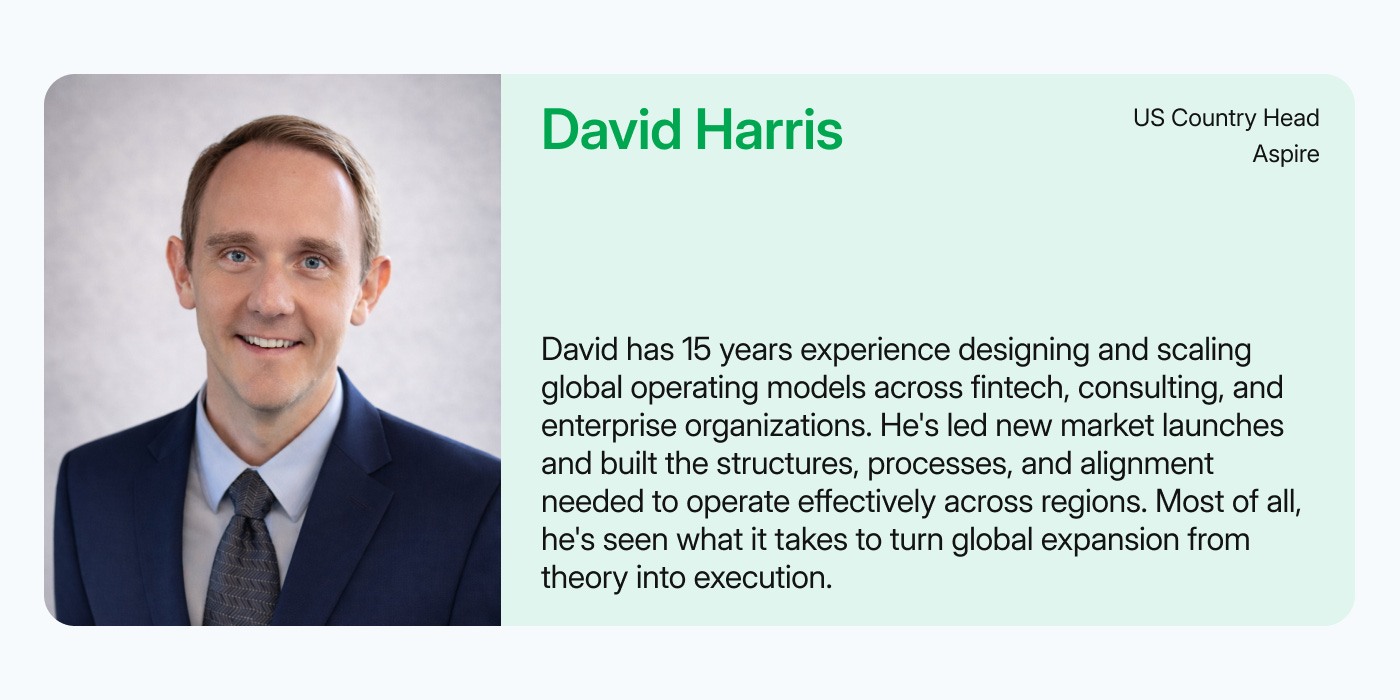
The expert
The answer
Here’s what you should know. Your US competitors likely have deeper pockets, a higher risk tolerance, and no sympathy for your time-zone struggles. To beat them, you don’t need a bigger team; you need a lean operating model that moves faster and is more deliberate than theirs.
Now, before we talk about operating models, it’s better to talk about what are your objectives and your execution gaps – opportunity gaps and quality gaps.
When to hire locally
Founders hire in the US for different reasons. Sometimes due to a revenue goal; or sometimes because they hope a “rockstar” will swoop in and solve the mystery of the U.S. market and save the day.
Spoiler: That’s not a winning formula. If you don’t understand your U.S. customer yet, hiring someone else to find them will be expensive and setting everyone up to fail.
Before you hire, run your expansion plans through these three filters:
Proximity filter: Do you really need to be in the room? If you are selling $100k+ enterprise contracts that require “white-glove” relationship building, yes. If your sales cycle is short and digital, maybe not.
Regulation filter: Is this Fintech, Healthcare, or GovTech? If local compliance is the gatekeeper, you need that individual who speaks the specific language of US regulators and can navigate the bureaucratic nuances that an overseas team will inevitably miss. (there are different strategies to conserve money here like contractors or part-time)
Time-zone filter: Can your customer success team handle a 12-hour delay? If a “Phase 1” pilot fails because a 2:00 AM bug report went unanswered for a full business day, you’ve hit your limit.
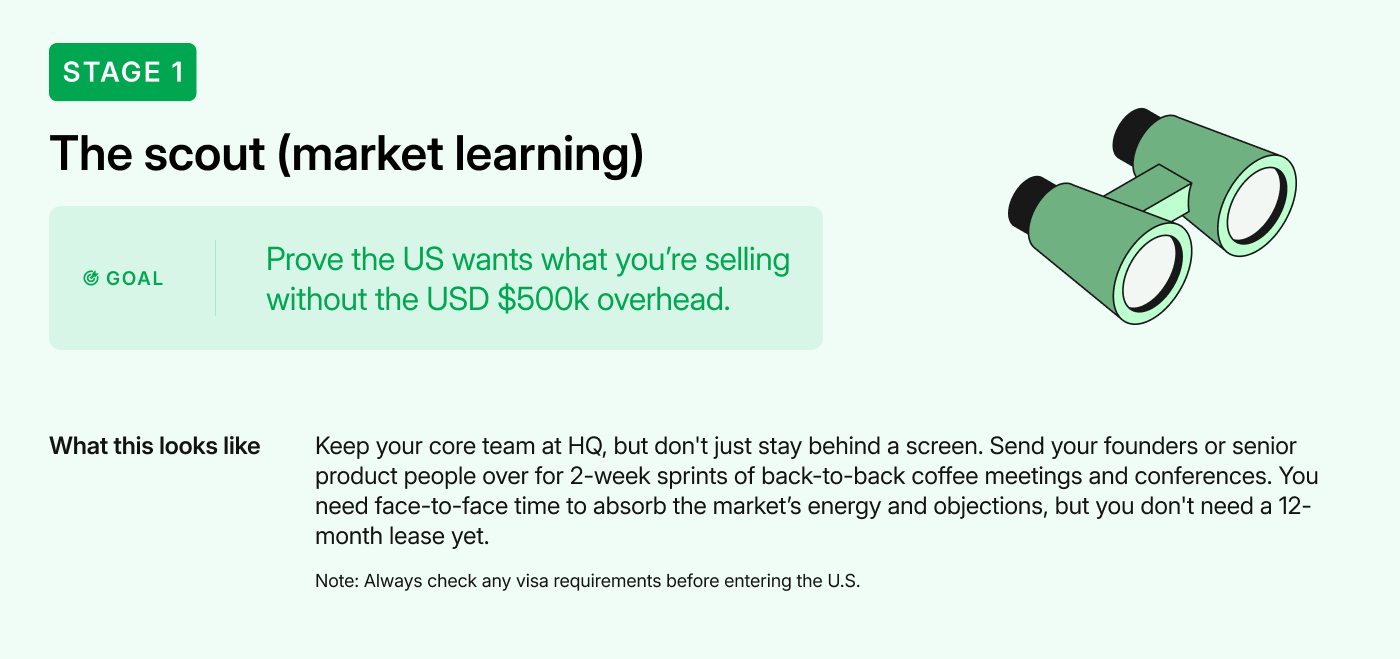
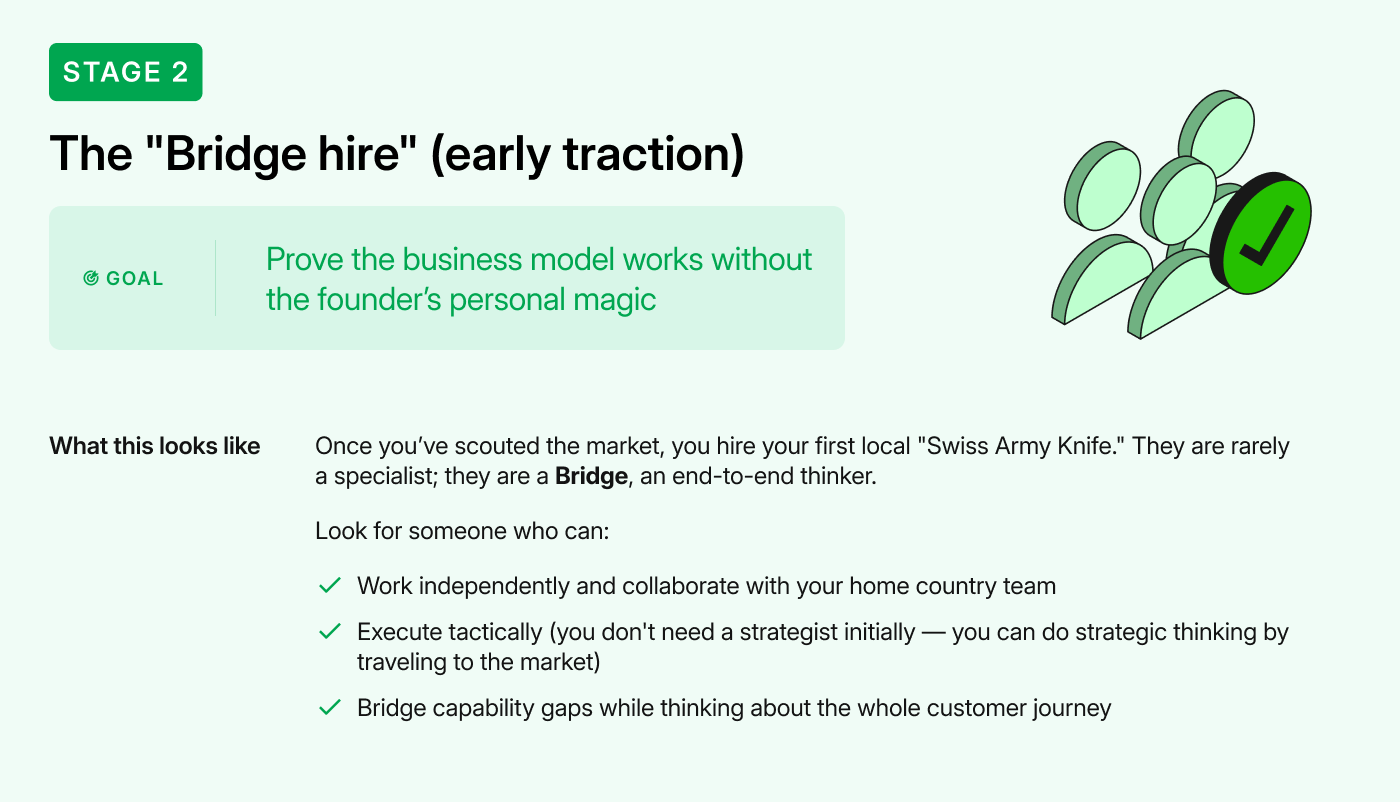
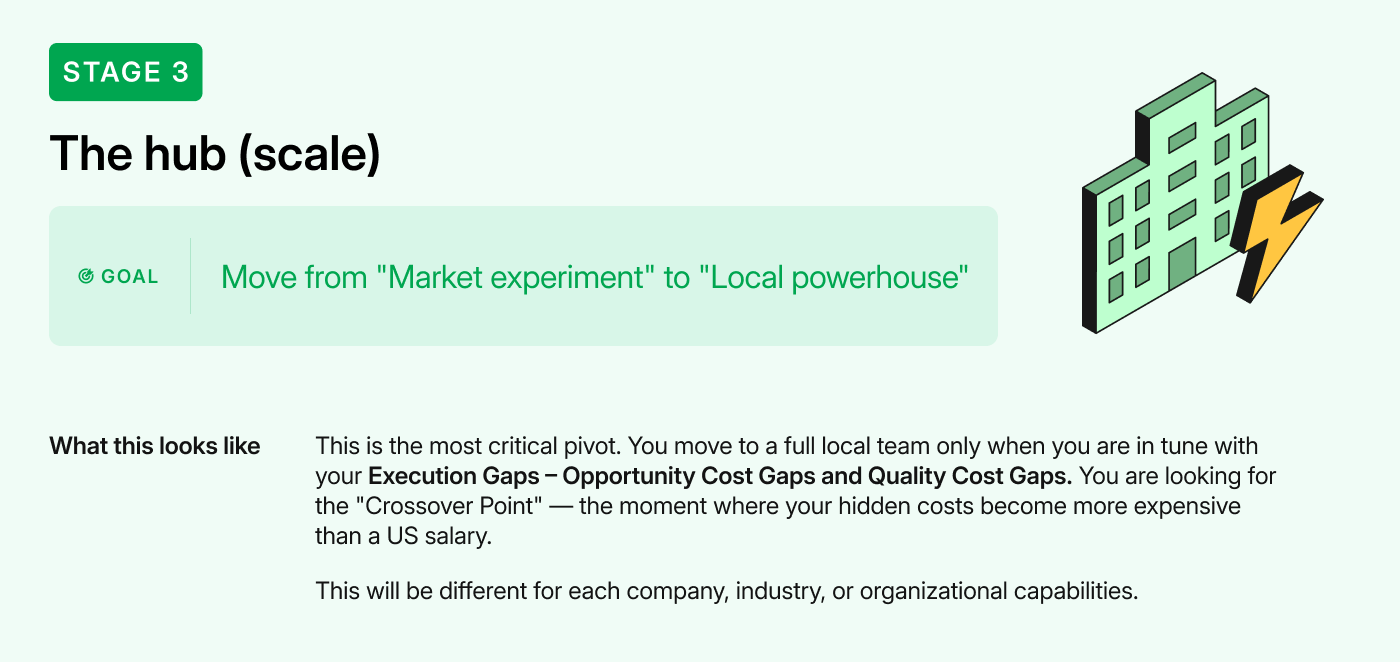
Most founders move through three distinct stages as they expand, and local hiring is usually the trigger that pushes you from one to the next.
I use something called a 72-hour stress test.
Before scaling any team, run this test. Can the market operate for three full business days without needing an “urgent” answer from HQ?
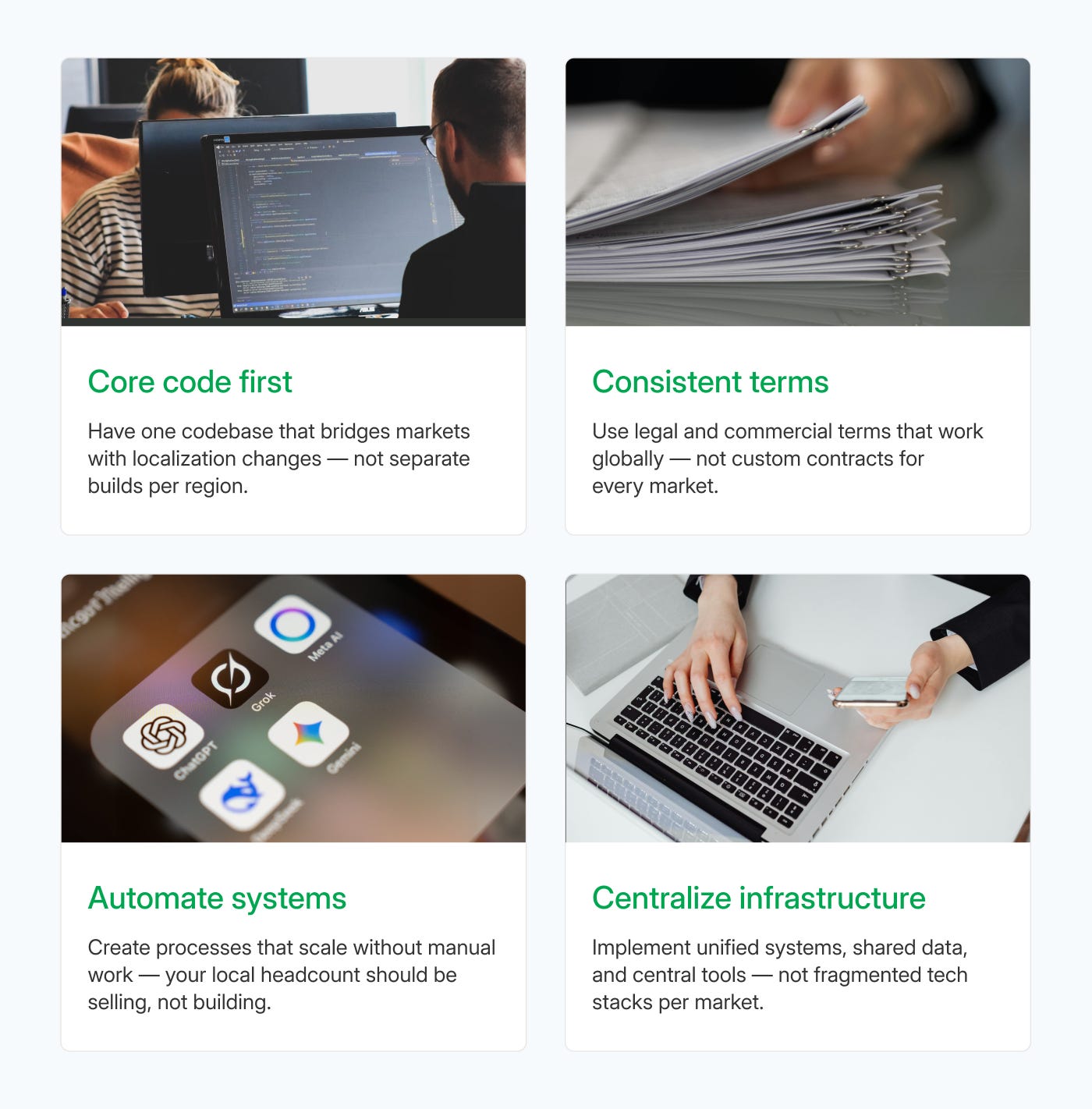
If the answer is no, your internal documentation is broken. Hiring a local team won’t fix that—it will just make the communication breakdown more expensive. You must invest in the global processes and systems to allow your local team to run after their objectives.
Keeping US headcount small only works if your home team is capable of supporting remote operations. If they can’t enable the local team, you’ll end up hiring locally just to compensate for those gaps. That’s expensive and messy.
Reminder on culture…
When thinking about your new market, how business gets done matters. Understanding local business culture, communication styles, and relationship-building norms can make or break deals. Sometimes this sits under profit (affects deal velocity), sometimes it’s its own consideration.
The same can be said on incorporating into the company culture. Your first US hires should spend their first two weeks at your home office. They need to absorb your DNA so they can represent you authentically when they are miles away.
The Aspire tip
Keep it lean. Keep it fast. Use this moment as a chance to level up everything you do globally. The US market won’t wait for you to get organized.
Take a trip to where your customers and competitors are. Use your network wherever possible. Talk to people. You’ll figure out pretty quickly where you actually need to be versus where operating remotely works fine.
And remember: opportunity costs matter, not just revenue. Think about quality costs too — what you need to invest to enable global expansion, even if it hurts unit economics initially.
Have a thorny question about your GTM strategy, tech stack, or global operations? Send it to us via foundersxchange@aspireapp.com or drop it in the comments below. We’ll tap into our network of experts to provide the real, actionable answers you need to keep building.